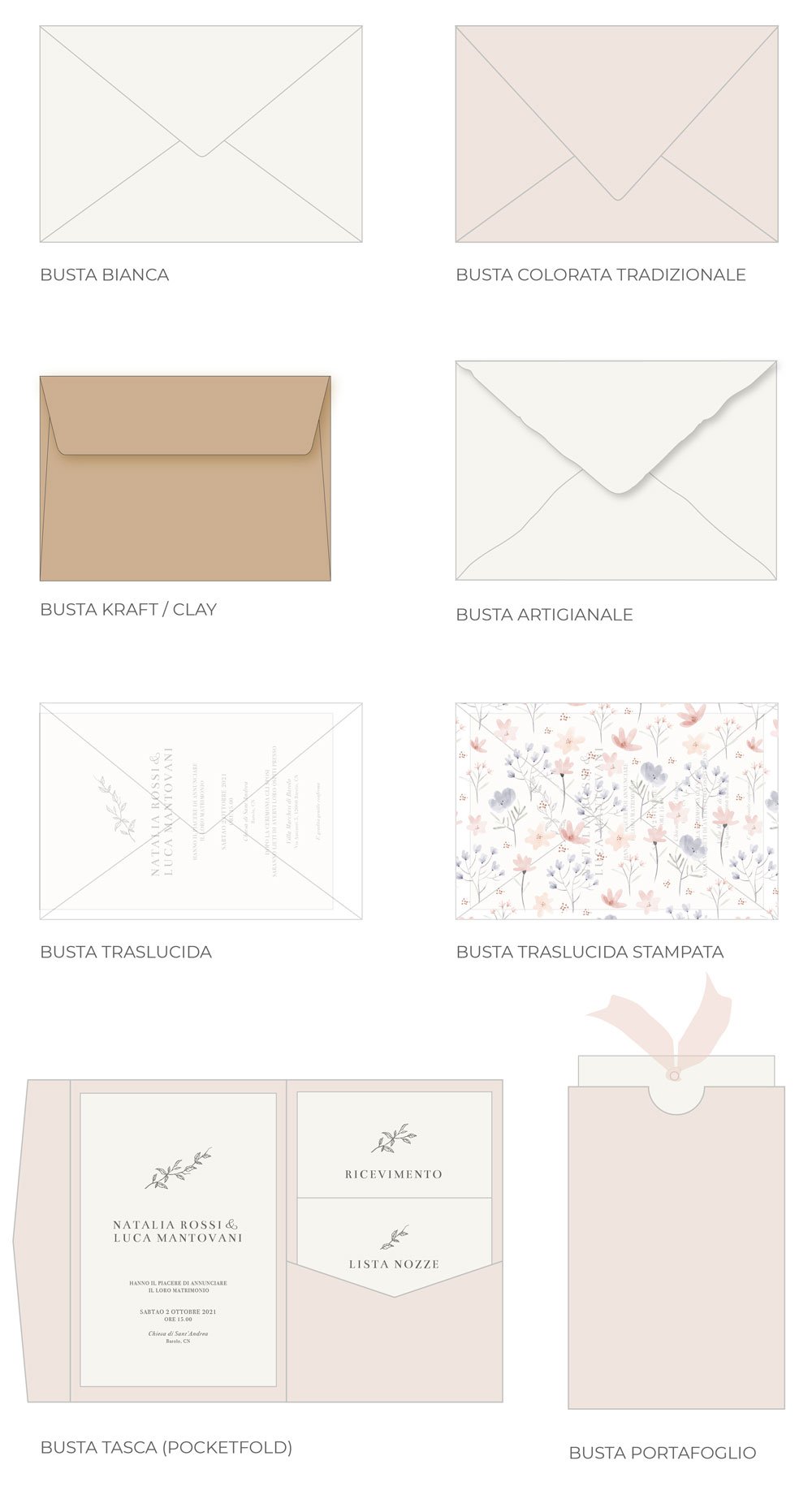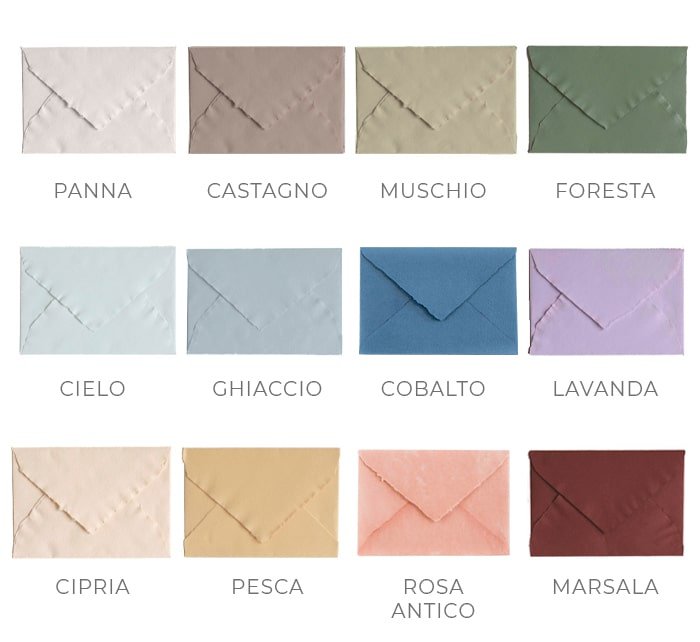
It's normal not to know anything about paper and printing techniques. You definitely know what you like, but you might not have an idea of the printing process needed to achieve what you want.
Don't worry, here I will explain the differences between the three printing methods I offer, so it will be easier for you to make a decision.

Digital printing
COLOURS AND TECHNOLOGY


Digital printing is definitely the one you're most familiar with. In this case, a professional digital printer is used, offering better and wider colour reproduction compared to regular printers, allowing printing on papers with uneven surfaces and much thicker materials like the cardstock I offer.
The ink is applied directly onto the paper without any embossing or metallic effects. Being a simpler process, this is the most affordable technique among the different ones I offer.
LETTERPRESS PRINTING
DISCOVERING AN ANCIENT ART

Here are the movable typefaces used for letterpress; a custom plate will be created with your design.
Letterpress printing is essentially the revival of an ancient printing technique, where old printing presses are used, operating mechanically. To print using letterpress, metal plates (usually made of plastic today) called “typographic clichés” are created, which are used to make an impression on each individual piece of paper. In order to perform letterpress printing, a vector file must be created, which allows for the precise engraving on the plate, which will then be used to print your invitations.

The colour is prepared and mixed by hand.
The first thing to understand about letterpress printing is that each colour must be printed separately. The ink is hand-mixed to achieve the exact desired shade before being applied to the rollers. The typographic plate, specifically created for you, is loaded onto the machine and inked with the rollers. After that, a 100% manual process begins, where a single piece of cardstock is loaded at a time, pressed, and printed.


A colour is loaded onto the rollers and platen one at a time (in this case, blue).
If you have decided to print in two colours, each individual piece must go through the machine not once, but twice, because each plate can only print one colour.
I recommend using 450g cotton paper, as its thickness will leave a very noticeable impression with letterpress printing, creating beautiful pieces to keep and touch.

Using thicker papers, such as 450g cotton paper, the embossed effect will be much more noticeable.
Letterpress printing is an ancient art, creating handcrafted pieces. It requires more effort than any other type of printing, as it is a manual process that demands great patience and extensive knowledge of the technique. This makes letterpress printing much more expensive than digital printing.
FOIL PRINTING
AN ELEGANT AND TIMELESS DETAIL

Hot foil stamping is a printing method very similar to letterpress, where instead of ink, a metallic foil is applied using a heated plate. The heat and pressure will permanently bond this foil to the surface of the cardstock.

To print, a custom plate with your design is required, along with a roll of metallic foil in the chosen colour.
It is a technique that is often used in conjunction with digital printing. The invitations are first printed digitally (allowing for various colours and shades), and then they are pressed into the machine to add names and details with that beautiful metallic effect.


The roll of the desired metallic colour is loaded, and through heat, it is transferred onto the paper.
The metallic roll is rotated on the machine, and thanks to the pressure and heat, the foil is transferred onto the surface of the paper.
I recommend using a smooth or translucent paper, as its uniform surface allows for better adhesion of the foil, ensuring the final effect will feature a bright and even print.

This technique is ideal for printing on smooth and even papers such as translucent paper.
PAPER TYPES
available options

- 1. Hammered 300gr -
Watermarked paper, rough to the touch, ideal for digital printing
- 2. Handmade 340gr -
Handmade paper with irregular edges
- 3. Translucent 230gr -
Semi-transparent paper, suitable for hot foil and digital printing
- 4. Cotton 360/450gr -
Thick paper perfect for letterpress and hot foil printing
- 5. Smooth 250gr -
Smooth and homogeneous paper, perfect for hot foil and digital printing
- 6. Colored 240/300gr -
Paper available in 16 colours, ideal for elegant and simple designs
want to see everything live?
ORDER THE SAMPLE KIT
This kit will help you understand the printing methods, types of paper, colours, and accessories available; it will allow you to order your Wedding Suite with peace of mind, knowing that you are familiar with the quality of the products you have chosen.